

Isolation and trauma
Navigating grief beyond the planetes


Content Warning: This post discusses trauma, PTSD, depression, and suicidal ideation in the context of space exploration and mental health. If you are struggling, please reach out to a mental health professional. You are not alone.
There is something profoundly unsettling about the vast emptiness of space. It is not just the absence of air or gravity but the sheer isolation—the inescapable smallness of the human body against the infinite void. For Hachimaki (ハチマキ), the protagonist of Planetes (プラネテス), space is not just a dream but a career. As a debris collector, he hopes to one day become an astronaut. But beyond the grandeur of space travel lies an unrelenting adversary: space itself.
Astronauts are often seen as modern explorers, figures of competence and resilience since surviving in space demands physical and psychological endurance. Microgravity wreaks havoc on the human body: bones deteriorate, muscles atrophy, and the cardiovascular system struggles to adapt. Prolonged exposure leads to disorientation, dizziness, and weakened reflexes. But even more insidious are the mental challenges—prolonged isolation, confinement, and monotony that can break even the most disciplined minds. Space agencies like NASA conduct rigorous psychological screenings to ensure astronauts can endure months—or even years—without Earth’s familiar sights and sounds.
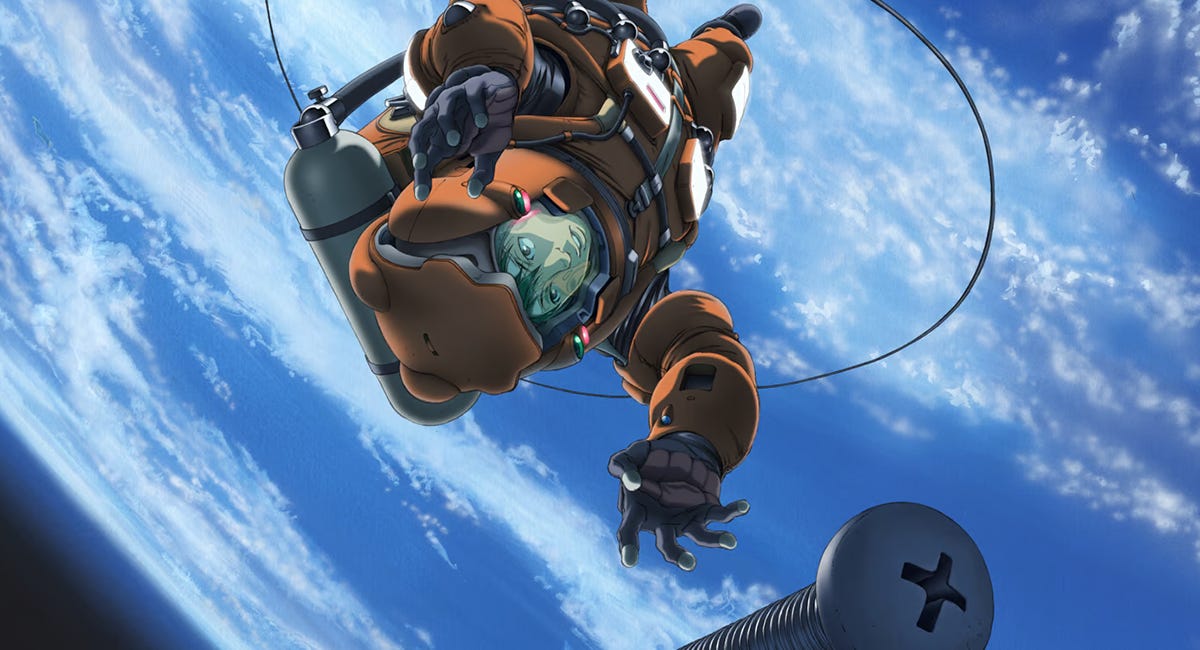
Thus, after a near-fatal accident, Hachimaki exhibits symptoms resembling post-traumatic stress disorder (PTSD): intrusive thoughts, avoidance of spaceflight, emotional numbness, deep anhedonia and hallucinations—visions of himself in space, encounters with alien-like beings gazing at the Milky Way. His journey is not just a physical one but an internal battle with trauma, depression, and existential dread. His decline reaches its lowest point during a near-suicide moonwalk, paralleling the fate of Roland, another character lost to despair in the series. This moment is not just a dramatic turning point—it is a stark, realistic portrayal of how extreme isolation and trauma distort perception. Neuroscientifically, chronic stress and trauma dysregulate the hypothalamic-pituitary-adrenal (HPA) axis, increasing cortisol levels and impairing emotional regulation. The prefrontal cortex, responsible for rational thought and impulse control, weakens under prolonged stress, while the amygdala—the brain’s fear center—becomes hyperactive. This imbalance fosters self-destructive thoughts.
His eventual recovery is neither instant nor easily resolved. Planetes refuses to offer a simple “fix” for trauma. Instead, it depicts the slow, painful process of re-engaging with life—finding meaning in relationships, redefining goals, and confronting fears. A pivotal moment in his healing comes when his friend exposes him to the Tandem Mirror Engine of the exploration ship Von Braun, reigniting his passion for space and aiding his recovery. This mirrors contemporary therapeutic approaches like cognitive-behavioral therapy (CBT) and exposure therapy, which help individuals reframe their experiences and regain a sense of agency.
Yet, Planetes suggests that acceptance is not surrender but a means of finding peace in uncertainty. Real-life astronauts often describe a similar transformation. The “Overview Effect,” a cognitive shift reported by those who have seen Earth from space, fosters a profound awareness of the planet’s fragility and humanity’s interconnectedness.
Curiously, the psychological struggles in Planetes are not confined to science fiction. The deep isolation experienced during the COVID-19 pandemic mirrors Hachimaki’s ordeal. Just as his mental state deteriorates under extreme isolation, many individuals during lockdowns reported increased anxiety, depression, and existential distress. Planetes reminds us that resilience is not about avoiding hardship but about learning to navigate and make meaning from it, even when the world—or the void—feels inescapable.
That’s all for now—stay wired!
Want to Dive Deeper?
Alone with Your Thoughts – How self-isolation during COVID-19 impacted mental health and cognition.
The Weight of the World – Exploring the link between depression and existential dread in times of crisis.
Healing from Trauma – A look at PTSD and the strategies that help treat it.
 | A guest post by
|